
Weekly Aquarium Maintenance Checklist: A Simple Routine for a Healthy Fish Tank
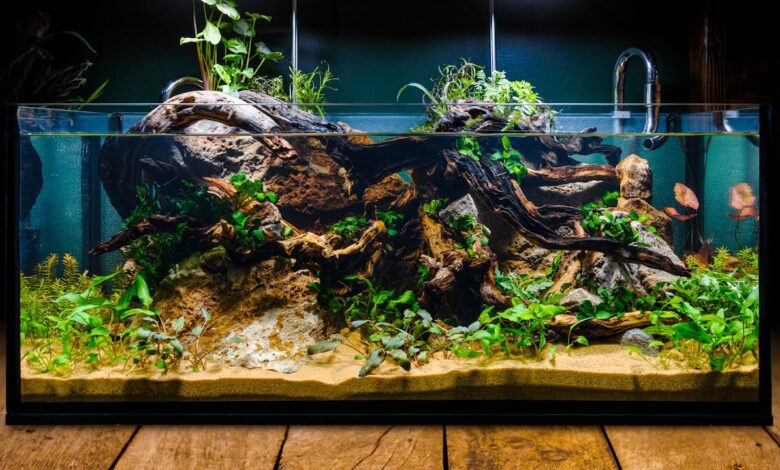
First of all, keeping an aquarium healthy does not require hours of cleaning every week. People often worry about aquarium maintenance as they magnify it more than necessary. We prepared this simple guide to provide you with a simple routine so that the process will no longer cause anxiety.
A simple and consistent maintenance routine can prevent most of the problems, such as algae growth, poor water quality, clogged filters, and stressed fish. The advantage of a weekly aquarium maintenance routine is to observe the well-being of your fish and notice small changes before they become serious problems. The exact routine depends on your aquarium size, number and type of fish, filtration system, plants, and feeding schedule. On a positive note, most freshwater aquariums benefit from regular water testing, debris removal, equipment checks, and partial water changes.
Let’s start our weekly aquarium maintenance checklist which will help beginners keep their tanks clean and stable.
What You Need for Weekly Aquarium Maintenance
Here is the basic equipment you need to have before starting your maintenance:
- Aquarium water test kit or test strips
- Aquarium-safe bucket
- Gravel vacuum or siphon
- Algae scraper or aquarium glass cleaner
- Water conditioner suitable for your tap water
- Clean cloth or towel
- Filter-cleaning equipment if needed
- Thermometer
We will show what each item will be used for as we go. Starting with an important note, do not use household soaps, detergents, or chemical cleaners inside your aquarium. Even small amounts can be dangerous to fish.
1. Observe Your Fish First
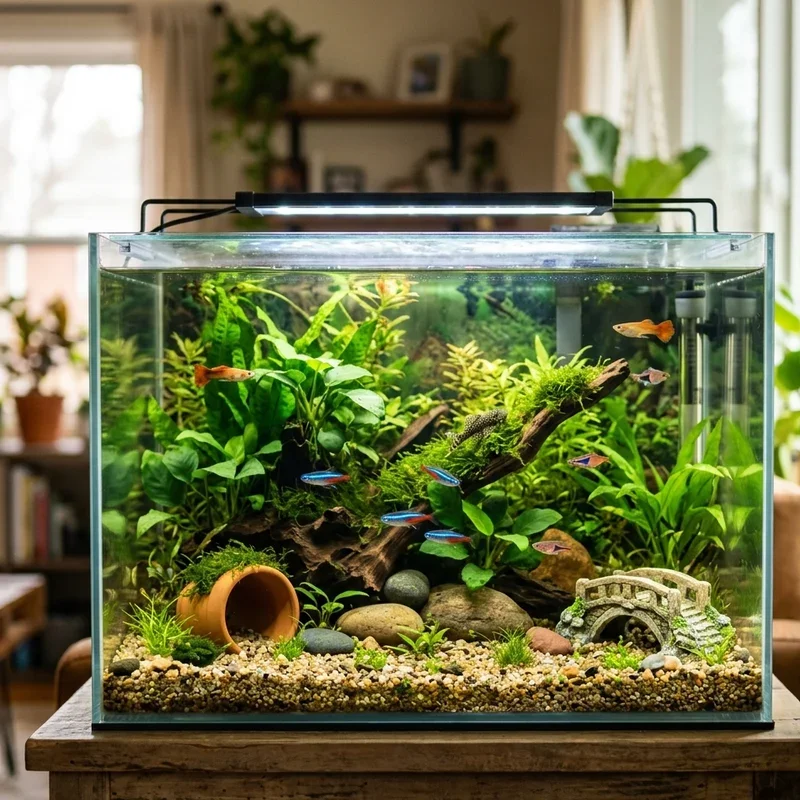
The initial step is to observe your fish. Before cleaning anything, spend a few minutes observing your fish.
This part is often overlooked although it is extremely essential. As a tip, healthy fish should generally behave normally for their species. Look for unusual behaviours such as hiding, rapid breathing, loss of appetite, clamped fins, white spots, wounds, or swimming differently than normal.
2. Check the Aquarium Equipment
In this step, we will look at the filter, heater, air pump, and lights.
The first thing is to make sure the filter is running normally and that water is flowing through it. A reduction in flow is likely to mean that mechanical filter media is becoming clogged.
Secondly, check the heater and thermometer to make sure the temperature is appropriate for your fish. The correct temperature depends on the species, so follow the care requirements for your particular fish rather than using one temperature for every aquarium.
Plus, if you have an air pump, check whether bubbles and airflow appear normal.
This step of checking equipment is important as it can prevent a small problem from becoming a major one. For example, a failed filter or heater can affect aquarium conditions surprisingly quickly.
3. Test Your Aquarium Water
Here we also need to test the water.
In most cases, water may look perfectly clear while still having poor water chemistry. Testing can help you identify changes that cannot be seen by simply looking at the water, such as toxic ammonia or nitrite levels.
The most important parameters to check are ammonia, nitrite, nitrate, and pH. More specifically, ammonia and nitrite are particularly important because they are toxic to fish. Beneficial bacteria in an established aquarium help process fish waste through the nitrogen cycle, converting ammonia into nitrite and then nitrate. Ideally, ammonia and nitrite should remain at 0 ppm, while nitrate should stay at a low level.
If your test results show an unexpected problem, do not simply add chemicals without understanding the cause. Check for possible reasons such as overfeeding, too many fish, a dead fish, insufficient filtration, or a disrupted biological filter.
New aquariums require special attention because their beneficial bacterial colonies may not yet be fully established.
4. Remove Uneaten Food and Visible Waste
Accumulated organic food waste yet is another important thing to check. To do so, you can look at the bottom of the aquarium for uneaten food, or any other kind of waste.
A small amount of debris is normal, but you should not allow organic material to build up as it can contribute to declining water quality.
Why is organic waste accumulating? Overfeeding is the most common reason for excessive waste. As a general guideline, most aquarium fish should receive only as much food as they can reasonably consume within a short feeding period.
If you repeatedly find large amounts of leftover food, review your feeding routine rather than simply cleaning more often.
5. Clean the Aquarium Glass
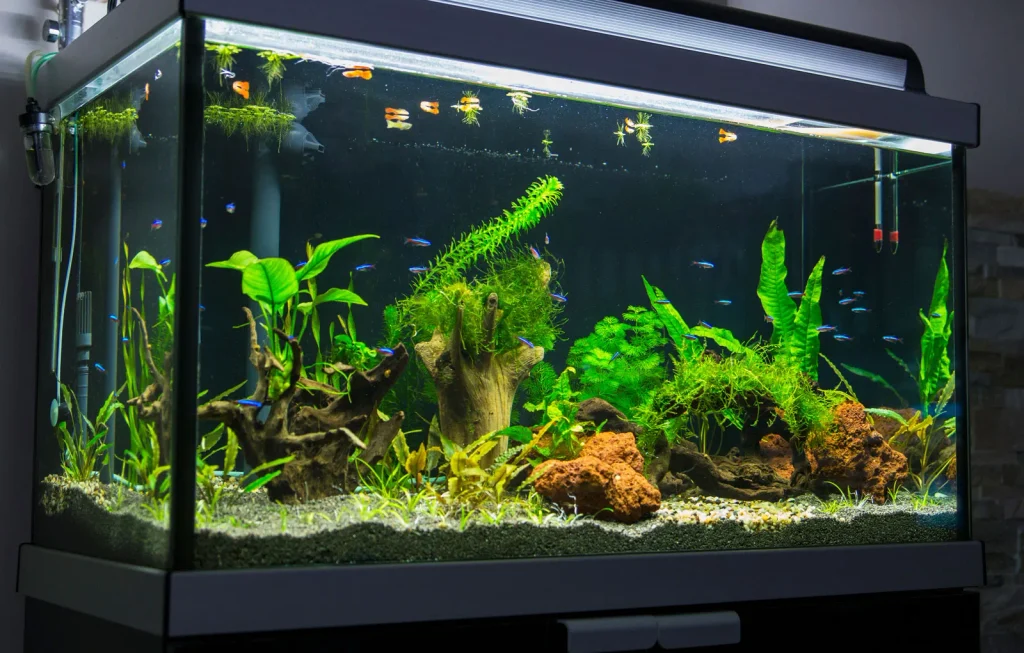
While cleaning the bottom, you should not skip the glass itself. It is because algae and mineral deposits can build up on the inside of aquarium glass.
To eliminate the problem, use an aquarium-safe algae scraper, sponge, or magnetic cleaner to remove the buildup. Yet be careful not to scratch the glass.
However, you do not need to make the aquarium completely free of algae. A small amount is normal, especially in planted aquariums. The aim is to keep the glass clear enough to observe the fish and enjoy your aquarium.
Do not forget that excessive light, excess nutrients, overfeeding, and poor maintenance can all cause algae problems.
6. Perform a Partial Water Change
Do you know that you do not need to change aquarium water all together?
Instead of removing all the water, replace a portion of water. The amount and frequency of the portion should be determined by your aquarium’s stocking level, filtration, feeding habits, and water test results.
It is worth noting that there is no single percentage that is perfect for every aquarium. Some established aquariums may use smaller weekly changes, while others may require larger or more frequent changes. Aqueon notes that a 10% weekly exchange can be suitable, while 25% changes once or twice a month may be enough for many aquariums.
When preparing replacement water, make sure it is safe for aquarium use. For instance, tap water may contain chlorine or chloramine, which can harm fish and beneficial microorganisms. Therefore, it is recommended to use an appropriate water conditioner according to its instructions.
As a last note, try to avoid sudden major changes in temperature or water chemistry. Large changes can stress fish.
7. Vacuum the Substrate Carefully
What about substrate and gravel? A gravel vacuum is important in removing waste and debris that has collected between pieces of gravel.
To do that, move the siphon over different areas of the substrate, do not aggressively disturb the entire bottom of the aquarium every week.
Be careful with heavily planted aquariums. Some plants may benefit from having their roots and surrounding substrate left relatively undisturbed.
Remember that beneficial bacteria live not only in filter media but also on surfaces throughout the aquarium, including gravel, decorations, and plants.
So, the goal is not to sterilize your aquarium. A healthy aquarium is a small biological ecosystem, and some microorganisms are necessary for its stability.
8. Check the Filter, But Don’t Over-Clean It
Obviously, the aquarium filter needs care especially when its water flow decreases, but it does not necessarily need a complete cleaning every week.
Mechanical filter material can collect food pieces and waste. If it is clogged, you should follow the manufacturer’s cleaning instructions.
However, be careful with biological filter media. Because beneficial bacteria living in the filter are an important part of the aquarium’s biological filtration system. Deep cleaning or replacing all biological media altogether can damage the bacterial population.
So do not fall to the common beginner mistake of thinking that the cleaner the filter is, the healthier the aquarium will be. That is not always true.
9. Inspect Plants and Decorations
So, after all these checks, here is the final thing. You should always check your aquarium plants and decorations in the end.
In this step, remove dead or badly damaged plant leaves. Also, check decorations for excessive algae or debris, and make sure nothing has moved into a position that could injure your fish.
A Simple 20–30 Minute Weekly Routine
For a typical freshwater aquarium, you can organize the routine like this:
First 5 minutes:
Observe the fish, check the temperature, and inspect the filter and other equipment.
Next 5 minutes:
Test the aquarium water and record the results.
Next 5–10 minutes:
Clean the glass, remove visible debris, and lightly vacuum the substrate.
Final 5–10 minutes:
Perform the planned partial water change and add properly conditioned replacement water.
The exact time will vary depending on aquarium size and equipment. Some tanks may take less than 20 minutes, while larger or heavily planted aquariums can require considerably longer.
What You Should Not Do Every Week
More cleaning is not always better.
Avoid completely emptying the aquarium, replacing all filter media at once, scrubbing every surface until it is sterile, or making large changes to water chemistry without a clear reason.
These actions can unnecessarily disturb the aquarium’s biological balance. Beneficial bacteria are an important part of the nitrogen cycle, and they need stable surfaces where they can grow.
Also, do not follow a maintenance schedule blindly. If your water tests indicate a problem, your aquarium may need attention sooner than your normal weekly routine.
Weekly Aquarium Maintenance Checklist
Use this quick checklist each week:
- Observe fish for unusual behavior or physical changes
- Check water temperature
- Check filter flow and other equipment
- Test important water parameters
- Remove uneaten food and visible debris
- Clean aquarium glass
- Inspect plants and decorations
- Vacuum part of the substrate if necessary
- Perform an appropriate partial water change
- Treat replacement tap water appropriately
- Check the filter and clean mechanical media if needed
- Record important water test results
Final Thoughts
A healthy aquarium does not need to be perfectly spotless. The goal of weekly maintenance is to control waste, monitor water quality, keep equipment working properly, and maintain a stable environment for your fish.
The most important habit is consistency. Spending a short amount of time each week checking your aquarium can help you discover problems before they become serious.
Remember that every aquarium is different. A lightly stocked, mature planted tank may need a different maintenance routine from a heavily stocked aquarium with large fish. Use your water tests, fish behavior, aquarium conditions, and equipment performance to adjust your routine.
When you understand what each maintenance task is actually doing, aquarium care becomes much easier—and your weekly cleaning routine becomes a useful part of keeping a healthy, stable aquarium rather than simply a chore.